
 Home
 Cart
 Login
Which Ice Type Is Best for Coffee Shops and Cafes?
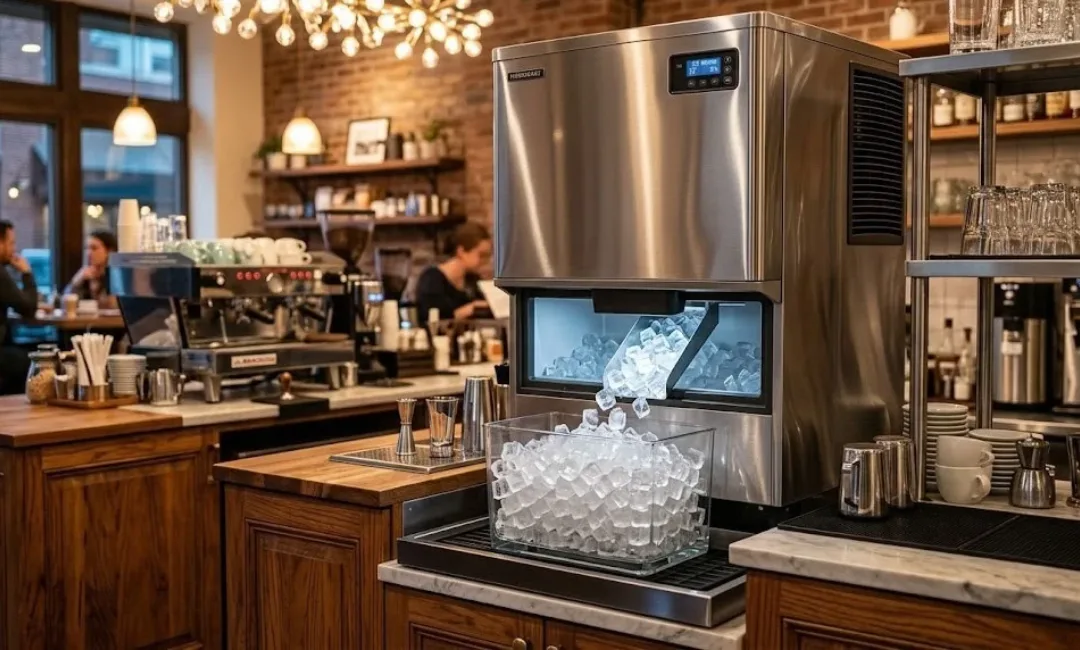
Ice might seem like a small part of a coffee shop, but it can have a surprisingly big impact on drinks, customer experience, and daily operations. From iced lattes and cold brew to refreshers and lemonade, the right ice helps keep beverages cold while controlling dilution and presentation.
For most cafes, the choice usually comes down to cube ice or nugget ice. However, the right option depends on your menu, customer preferences, available space, and how much ice you use during busy periods.
In this blog, you will learn about the different ice types for cafes, how cube and nugget ice compare, which options work best for iced coffee, and what to consider when choosing a commercial ice machine for a coffee shop.
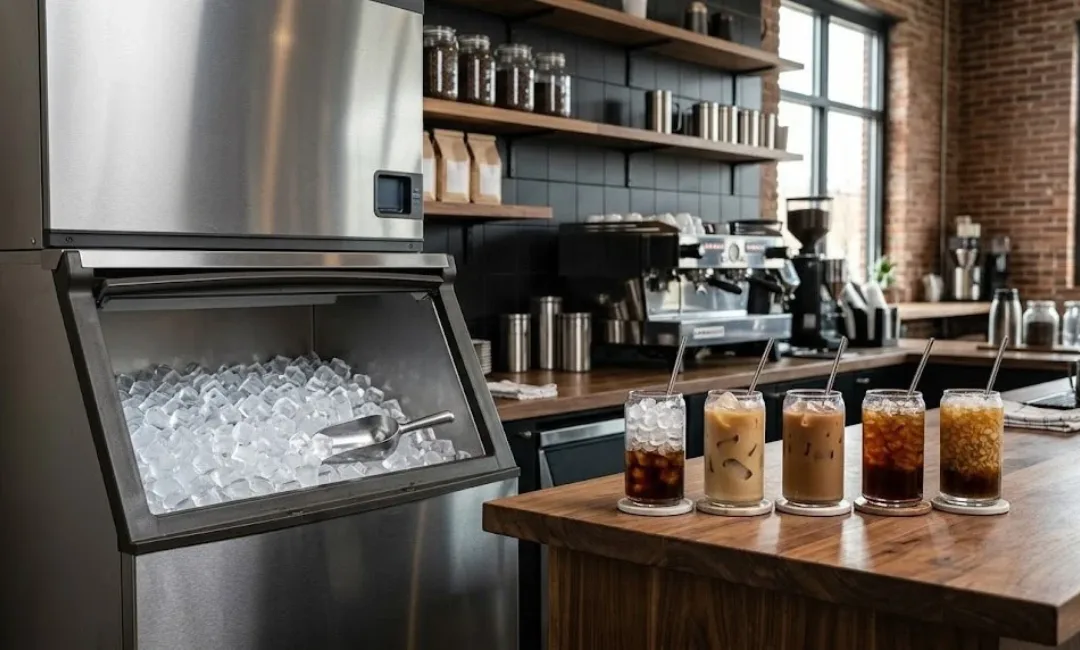
Why does ice type matter in a coffee shop?
Ice does much more than make a drink cold. Its shape, density, and texture influence how quickly a beverage cools and how quickly it melts.
For example, dense cube ice generally melts more slowly, which can help reduce dilution in drinks such as cold brew and iced coffee. Nugget ice is softer and chewable, making it popular for cafes that want to create a distinctive drinking experience.
The amount of ice your business needs also matters. A machine that produces enough ice during quiet hours may struggle to keep up during a busy afternoon or weekend rush. Therefore, ice production, storage capacity, and machine size should be considered alongside ice type.
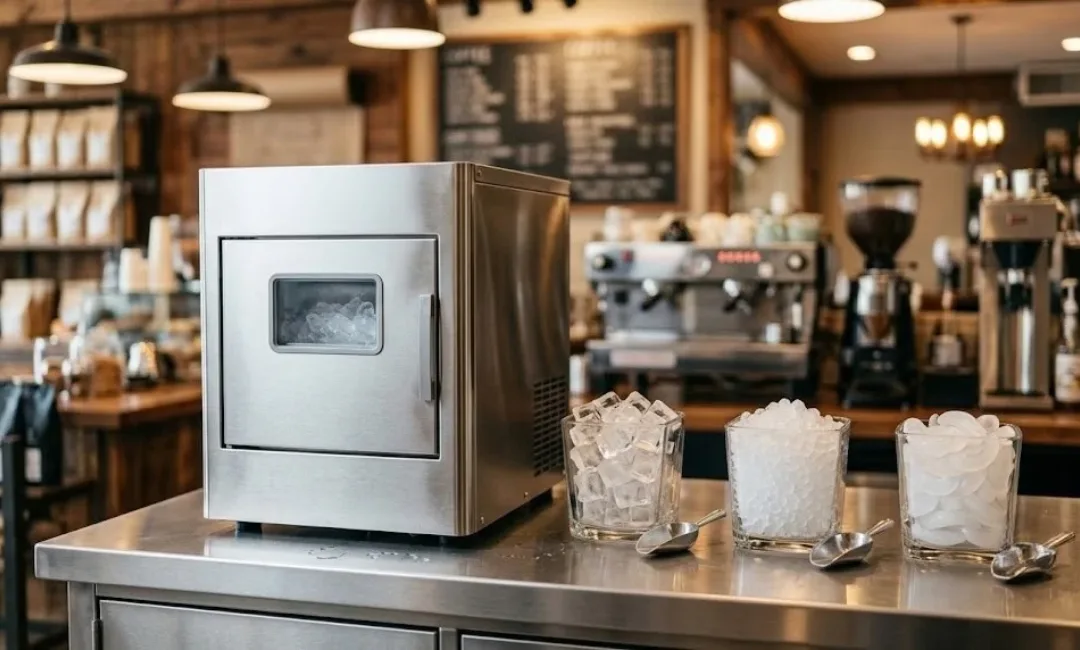
What are the main ice types for cafes?
Coffee shops can choose from several commercial ice styles, but three are particularly relevant to beverage service. A fuller comparison is in ice types by venue.
Cube ice
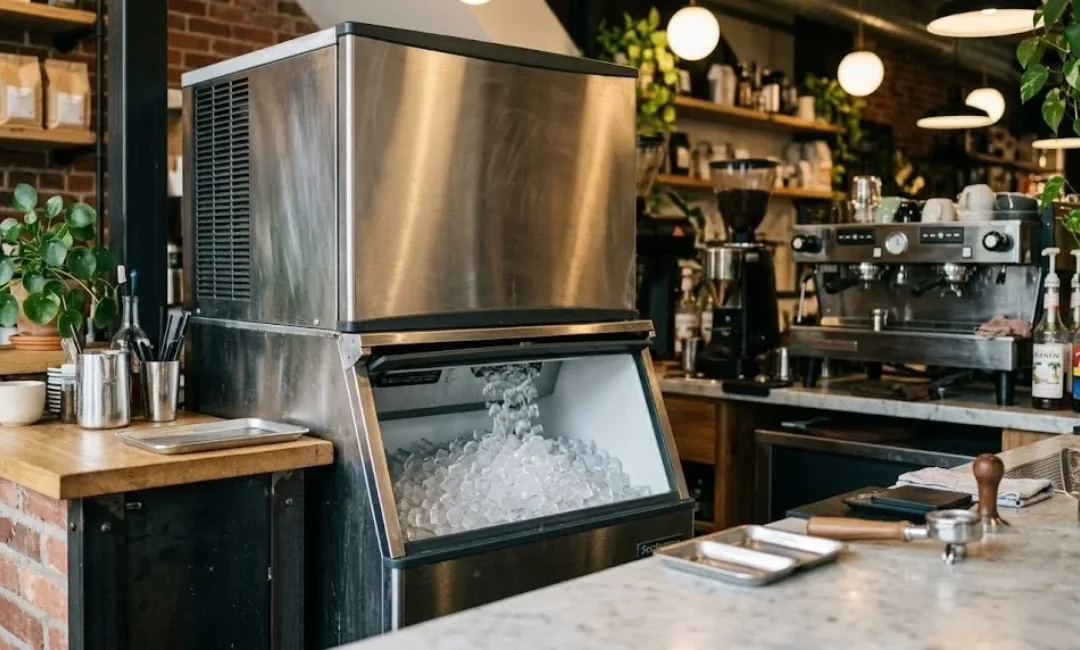
Cube ice is one of the most versatile choices for commercial beverage service. It is hard, dense, and generally slower-melting than softer ice varieties.
It works particularly well for iced coffee, cold brew, iced tea, lemonade, soft drinks, water, and refreshers. For cafes with a varied beverage menu, cube ice can be a practical all-purpose option. Smaller cube formats can also cool beverages efficiently while fitting easily into takeaway cups.
Nugget ice
Nugget ice has become increasingly popular because of its soft and chewable texture. Unlike traditional hard cubes, nugget ice is porous and easier to chew.
It can be particularly appealing for cafes serving iced coffee, flavored drinks, lemonades, smoothies and other cold beverages. Some customers even enjoy chewing the ice after finishing their drink, making its texture part of the overall experience.
The tradeoff is that nugget ice generally melts faster than dense cube ice. That makes it excellent for quick cooling and texture, but less suitable when slow dilution is the main priority.
Flake ice
Flake ice is soft, thin, and quick to cool. While it has useful applications in food displays and food preparation, it is generally not the first choice for a cafe whose primary requirement is beverage service.
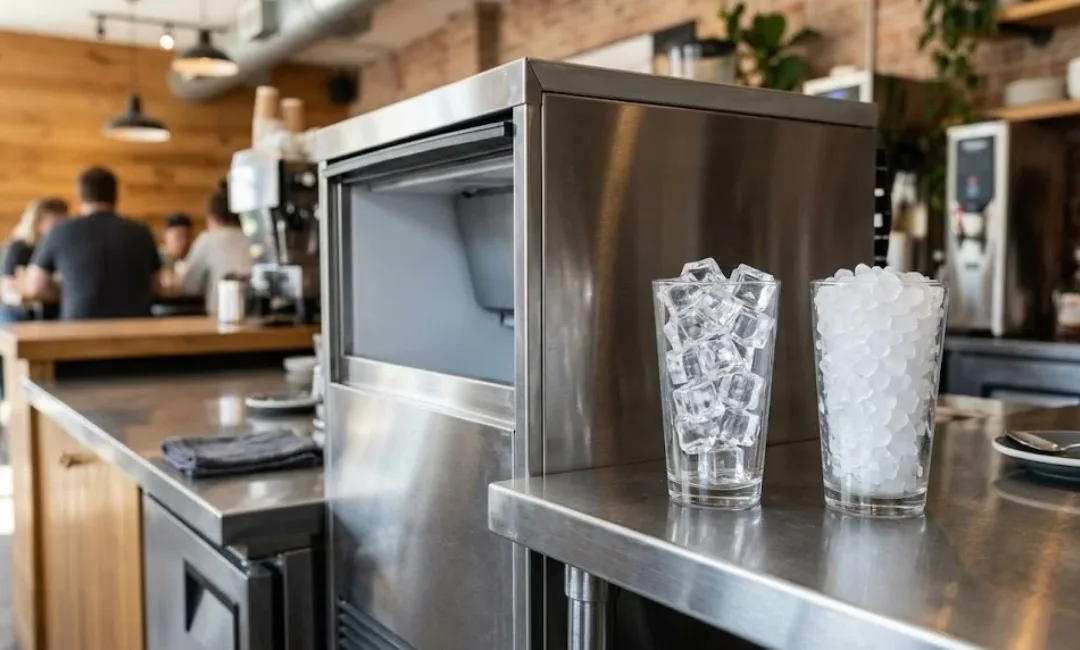
Nugget vs. cube ice for cafes
When comparing nugget vs cube ice for cafes, the answer depends largely on the drinks you serve.
Cube ice is hard and solid, and it generally melts more slowly. It fits iced coffee, tea, and a varied drink menu. The result feels familiar and practical.
Nugget ice is soft and chewable, and it generally melts faster. It fits iced coffee, soft drinks, and specialty drinks. The texture is part of the experience.
If your cafe serves a broad selection of drinks, cube ice offers flexibility. If your brand focuses heavily on cold beverages and customers appreciate soft, chewable ice, nugget ice can be an attractive option. You can compare both on the nugget ice rental and cube ice rental sections.
What is the best ice for iced coffee and beverages?
The best ice for iced coffee and beverages depends on the drink and the experience you want to create.
For traditional iced coffee and cold brew, cube ice is a dependable choice because its slower melting characteristics can help limit excessive dilution.
Nugget ice is worth considering when texture and customer experience are important. It can work particularly well with iced lattes, flavored cold drinks, refreshers, and beverages where customers enjoy soft ice.
If your menu includes both types of drinks, look at your sales mix before choosing a machine. Your most frequently ordered beverages should have the biggest influence on your decision.
Choosing a commercial ice machine for your coffee shop
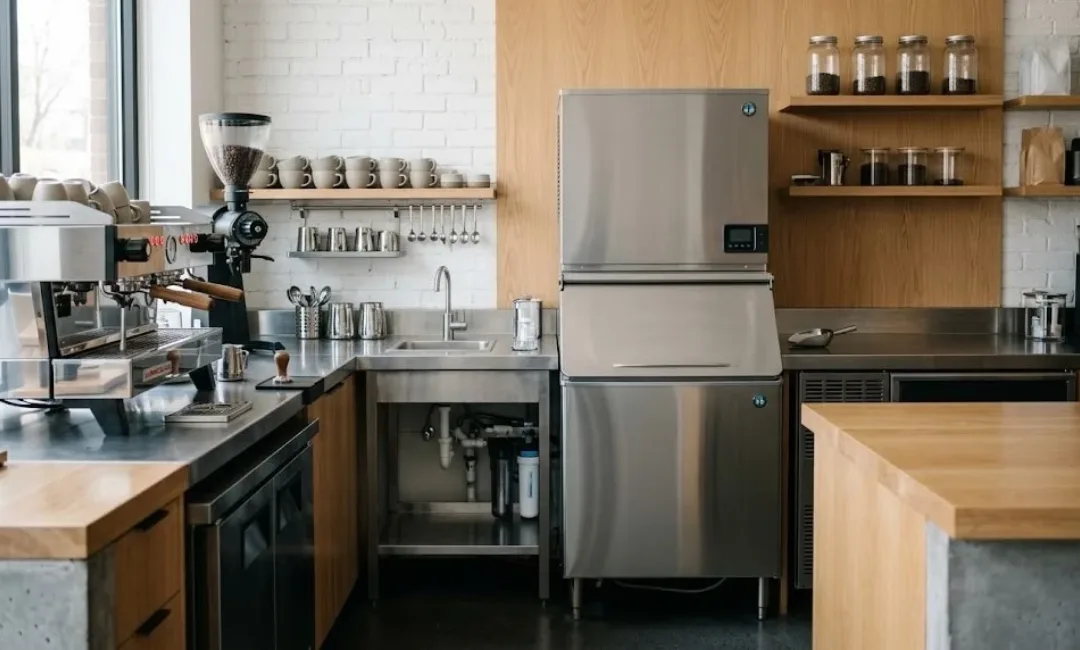
Once you know the ice type you want, the next step is finding the right commercial ice machine for coffee shop requirements.
- Daily ice productionEstimate how much ice your cafe uses on an average day and during its busiest periods. Peak demand is particularly important because running out of ice during a rush can slow service.
- Storage capacityProduction and storage are not the same thing. A machine may produce substantial quantities throughout the day, but the storage bin still needs to accommodate the periods when demand suddenly increases.
- Available spaceSmall cafes often have limited kitchen and counter space. An undercounter machine can be practical where space is restricted, while larger operations may need a higher capacity machine with separate storage.
- Cleaning and maintenanceRegular cleaning is essential for commercial ice equipment. Choose a machine that staff can access easily for routine cleaning and maintenance.
- Menu requirementsChoose your ice around your menu rather than choosing a machine first. The right machine should produce the type of ice your customers actually use.
Which ice type is best for coffee shops?
There is no single answer for every business. Cube ice is a versatile choice for cafes serving a wide range of cold beverages and where slower melting is important. Nugget ice is particularly suited to beverage-focused cafes that want soft, chewable ice and a different customer experience.
The best approach is to consider your menu, customer preferences, daily demand, peak periods and available space before investing in equipment. With the right ice type and appropriately sized machine, something as simple as ice can help your drinks stay consistent from the first order of the morning to the final takeaway cup of the day.
Frequently asked questions
Choosing the right ice can make a noticeable difference to the quality, consistency and presentation of drinks served in a busy coffee shop or cafe. Cube ice is a dependable choice for iced coffee, cold brew, and everyday beverages, while nugget ice offers a softer, chewable texture that many customers enjoy.
If you are looking for a commercial ice machine for coffee shop use, consider your menu, daily ice requirements, available space, and preferred ice type before making a decision. Shop ice machines, or read the restaurant ice machine guide if the cafe shares a kitchen with a full dining room.