
 Home
Home Cart
Cart
 Login
Login
Best Commercial Ice Machines for Restaurants: Quick Answer
By Daniel Hirsch • Last updated: August 19, 2026 • Reviewed against current Ice Machine Clearance catalog examples
For most restaurants, the best commercial ice machine is not simply the model with the highest production number. The right machine is the one that can cover your peak daily demand, produce the ice style your menu needs, fit your available space, match your electrical and plumbing setup, and store enough ice to carry the operation through busy service periods.
A small cafe may be well served by a self-contained undercounter machine, while a full-service restaurant or bar may need a modular cuber on a larger storage bin. Cocktail-focused concepts may prioritize large, slow-melting cubes, while seafood counters and food displays may need flake ice.
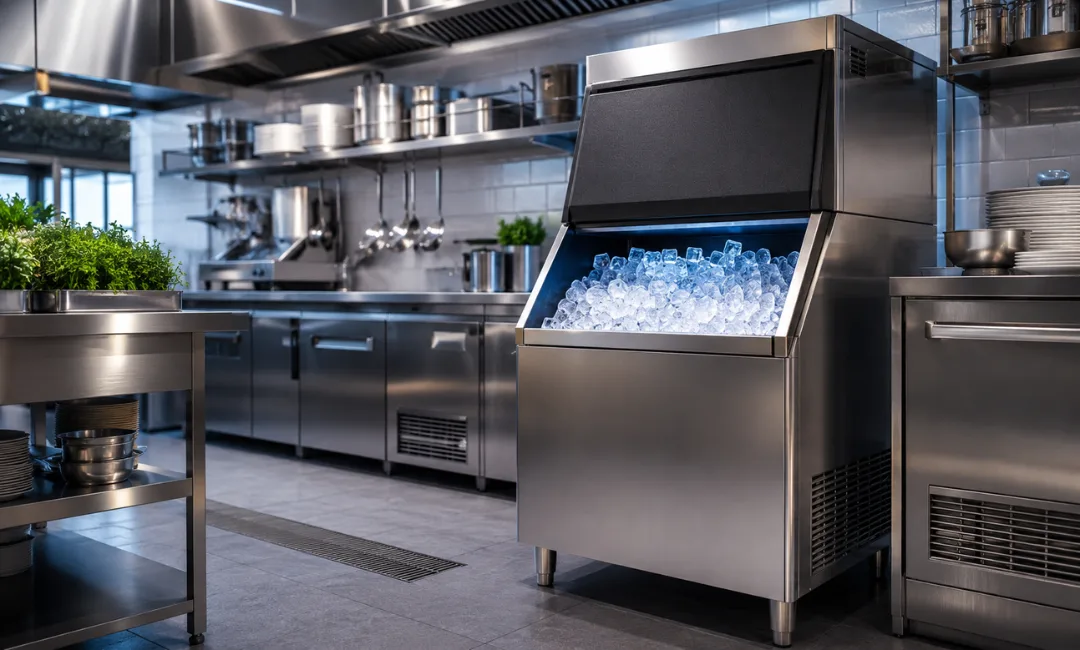
Commercial Ice Machine Examples for Different Restaurant Needs
To make the comparison practical, the table below uses real models listed by Ice Machine Clearance. These are examples to help you understand the size and style of machine that may fit a particular operation; they are not a permanent ranking, and inventory can change.
| Best for | Example model | Rated production | Ice / configuration | Pros | Watch for |
|---|---|---|---|---|---|
| Best Compact Small restaurant or cafe |
Hoshizaki KM-151BAH Check price & availability |
Up to 146 lb/day | Crescent ice; air-cooled; self-contained with built-in storage |
|
|
| Best Mid-Volume General restaurant beverage service |
Scotsman C0530MA Check price & availability |
Up to 562 lb/day | Air-cooled modular cuber |
|
|
| Best High-Volume Busy restaurants, hotels and catering |
Hoshizaki KM-1340MAJ Check price & availability |
Up to 1,275 lb/day | Crescent ice; air-cooled; modular |
|
|
| Best Cocktail Ice Bars and premium beverage programs |
Kold Draft GT561LC Check price & availability |
Up to 510 lb/day | Large cube; water-cooled; modular |
|
|
| Best Cubelet Self-service and chewable ice |
Hoshizaki DCM-270BAH Check price & availability |
Up to about 270 lb/day | Cubelet ice and water dispenser; air-cooled |
|
|
| Best Flake Example Seafood, produce and food display |
Ice-O-Matic EMF2300WS Check price & availability |
Approx. 2,624 lb/day | Flake ice; water-cooled; high-output modular unit |
|
|
Important: “Best” refers to the use case shown, not a universal ranking. Published production is a rated figure, not a guarantee of output in every kitchen. Ambient air temperature, incoming water temperature, ventilation, scale buildup and maintenance can reduce real-world production. Confirm the specification sheet and installation conditions for the exact machine before ordering.
Shop commercial ice machines or browse certified used and refurbished ice machines.
How We Evaluate a Restaurant Ice Machine
Ice Machine Clearance sells and supports commercial ice equipment, so this guide focuses on the factors that matter when a machine has to work in a real foodservice environment. A good recommendation should account for more than brand recognition.
- 01Peak production: enough output for the busiest operating period, not just the average day.
- 02Storage: a bin sized to hold enough ice between production cycles and service peaks.
- 03Ice form: cube, crescent, nugget, flake or large-format ice selected for the menu.
- 04Installation: width, depth, height, drainage, water, voltage, phase and ventilation.
- 05Cooling method: air-cooled, water-cooled or remote based on the room and utilities.
- 06Serviceability: access for cleaning, filters, routine maintenance and repairs.
- 07Total value: purchase price, water and energy use, condition, warranty and expected workload.
How Much Ice Does a Restaurant Need?
Start with your busiest realistic day. Hoshizaki's restaurant sizing guidance uses about 2 pounds of ice per customer per day as a general restaurant estimate, while bars and cocktail lounges may use about 3 pounds per seat per day. Manitowoc also recommends sizing around peak use and counting every place where ice is consumed, including beverage stations, bars, food displays and kitchen preparation.
| Operation | Useful starting point | What can increase demand |
|---|---|---|
| Full-service restaurant | About 2 lb per customer/day | Multiple beverage stations, hot weather, catering, large takeout volume |
| Bar / cocktail lounge | About 3 lb per seat/day | Large-cube cocktails, shaken drinks, bottle chilling, extended late-night service |
| Small cafe | Calculate peak daily customers and iced beverage mix | Iced coffee, blended drinks, seasonal summer demand |
| Seafood / food display | Add display and back-of-house ice separately | Continuous replenishment, drainage, flake-ice coverage area |
| Catering / banquet | Size for event peaks, not normal weekdays | Portable bins, off-site service, batch beverage chilling |
Simple sizing example
If a restaurant serves 150 customers on its busiest day, a 2 lb-per-customer starting estimate equals roughly 300 lb of ice per day. That is only the beginning: add any bar requirement, food-display use, kitchen use and a practical operating buffer. Then check whether the machine's rated production is realistic for your kitchen temperature and incoming water temperature.
Manufacturer sizing references: Hoshizaki America and Manitowoc Ice.
Which Type of Ice Is Best for Your Restaurant?
The shape of the ice affects drink presentation, displacement, melt rate, chewability and how well it works for food display. Match the ice to the job instead of treating every commercial ice maker as interchangeable.
Cube / Crescent Ice
A dependable all-purpose choice for fountain drinks, water service, iced tea and general restaurant beverages. It is usually the easiest category to match with broad foodservice demand. These ice types are typically produced using Hoshizaki ice machines.
Large / Gourmet Cube
Best suited to premium cocktails, whiskey and drinks where presentation and slower dilution matter. Kold Draft and specialty gourmet machines are common comparisons in this category.
Nugget / Cubelet Ice
Soft, chewable ice is popular for self-service beverages, iced coffee and concepts where customers value texture. Dispensing equipment can also simplify high-traffic beverage stations.
Flake Ice
Flake ice packs and molds around products, making it well suited to seafood, produce, salad bars, buffets and food presentation rather than only drink service. All flake ice machines offer high volume production.
Modular vs Undercounter Ice Machines
Modular Ice Machine
A modular machine is an ice-making head designed to sit on a compatible bin or dispenser. It is usually the better route for restaurants that need medium-to-high production and want to choose storage separately.
- Better for larger production ranges
- Lets you pair production with a suitable bin
- Useful for restaurants, bars, hotels and catering operations
- Requires compatibility checks between head, bin and accessories
Undercounter / Self-Contained
An undercounter unit combines the ice maker and storage bin in one cabinet. It is convenient where space is limited and daily ice demand is moderate.
- Compact footprint
- Built-in storage
- Useful for cafes, small restaurants and bar stations
- Production and storage are limited by cabinet size
Air-Cooled vs Water-Cooled vs Remote Ice Machines
| Cooling type | Best fit | Advantages | Watch for |
|---|---|---|---|
| Air-cooled | Many standard restaurant installations | No additional condenser-water consumption; widely available | Needs airflow and ventilation; releases heat into the surrounding room |
| Water-cooled | Locations where room heat or airflow is a major concern | Rejects condenser heat through water instead of blowing it into the room | Uses additional water; local utility cost and water restrictions matter |
| Remote | High-volume sites that want condenser heat/noise moved away from the kitchen | Can reduce heat and noise around the ice-making head | More complex installation; requires the correct remote condenser and line-set design |
Do not choose cooling type from the product name alone. Confirm required clearances, drain arrangement, condenser location, water pressure, voltage, phase and local plumbing/electrical requirements before purchase.
Commercial Ice Machine Brands to Compare
Ice Machine Clearance regularly lists equipment from major commercial manufacturers. Rather than naming one brand as universally best, compare each manufacturer's available ice forms, production ranges, parts/service access and the exact model condition.
Hoshizaki
Strong choice to compare for crescent, cubelet, flake and specialty ice, with compact self-contained machines as well as high-output modular equipment.
Manitowoc
Offers broad commercial cube, nugget and flake options across undercounter and modular formats. A useful brand to compare when service access and foodservice-focused controls matter.
Scotsman
Known for a wide range of cube, nugget and flake equipment, including compact undercounter models and large Prodigy-series modular machines.
Ice-O-Matic
Provides cube, flake and storage solutions across a broad capacity range. Compare exact condenser type, production rating and bin requirements for each model.
Kold Draft
Especially relevant for bars and restaurants seeking large-format cubes for premium cocktails and on-the-rocks beverage presentation.
Follett
Worth comparing for dispensing, nugget-style ice and applications where controlled ice delivery is as important as production.
Best Ice Machine Type by Restaurant Concept
| Restaurant type | What to prioritize | Typical direction |
|---|---|---|
| Small restaurant / cafe | Footprint, 115V options, built-in storage, iced beverage volume | Undercounter or compact self-contained cuber |
| Full-service restaurant | Peak customer count, fountain drinks, water service, kitchen use | Modular cube/crescent machine with matched bin |
| Cocktail bar | Cube size, clarity, melt rate, presentation, bar-back storage | Large-cube or gourmet ice machine |
| Fast-casual / self-service | Dispensing speed, customer preference, sanitation, refill demand | Nugget/cubelet dispenser or high-volume cuber |
| Seafood / buffet | Moldability, product coverage, continuous replenishment | Flake ice machine |
| Hotel / banquet / catering | Large peaks, transport, storage, redundancy | High-output modular units with larger bins or multiple machines |
How Much Does a Commercial Ice Machine Cost?
Commercial ice machine prices vary widely because two machines that look similar can have very different production capacities, ice forms, condenser systems and installation requirements. Instead of choosing by sticker price alone, compare the total installed cost and whether the machine can reliably cover your peak demand.
Machine & condition
New vs certified used, brand, production capacity and specialty ice type can materially change the purchase price. Current inventory can also affect which models are available at a given budget.
Storage & accessories
Many modular heads require a compatible storage bin or dispenser. Filtration, adapters, pumps and other accessories should be included in the budget where required.
Installation & operation
Electrical work, water supply, drainage, ventilation or remote-condenser work, shipping, water use and energy use all contribute to the machine's real cost over time.
| Cost factor | Why it changes your budget | What to verify before buying |
|---|---|---|
| Production capacity | Higher-output machines generally require larger components, utilities and storage. | Calculate peak daily demand so you do not pay for unnecessary capacity or buy too small. |
| Ice type | Cube, nugget/cubelet, flake and large-format ice use different machine designs and serve different applications. | Choose the ice form for your menu first, then compare machines within that category. |
| Configuration | Undercounter units include storage; modular heads normally need a separate bin or dispenser. | Confirm whether the listing includes storage and whether the bin is compatible. |
| Cooling method | Air-, water- and remote-cooled systems have different installation and utility requirements. | Compare ventilation, water cost, condenser placement and local installation conditions. |
| Condition & warranty | Certified used equipment can lower upfront cost, while new equipment typically carries manufacturer warranty coverage. | Review testing, condition, exact warranty terms and model/serial information. |
| Installation | Electrical, plumbing, drainage, filtration and site modifications can add to the project total. | Get the exact spec sheet reviewed before ordering, especially for voltage, phase and drain requirements. |
Pricing tip: because commercial and certified-used inventory changes, use the individual listing for the current machine price and availability. Then add any required bin, filtration, shipping and installation costs before comparing alternatives.
Compare current commercial ice machines or contact Ice Machine Clearance for help matching capacity and budget.
New vs Certified Used Commercial Ice Machines
New equipment can be attractive when you want the newest controls, a full manufacturer warranty and a specific current model. Certified used equipment can make sense when the priority is reducing upfront cost while still buying commercial-grade equipment that has been inspected and tested.
| Factor | New machine | Certified used machine |
|---|---|---|
| Purchase price | Usually higher | Often significantly lower than comparable new equipment |
| Condition | Factory new | Previously owned; condition should be inspected and documented |
| Warranty | Manufacturer warranty normally applies | Depends on seller and model; verify exact coverage |
| Model availability | Current production models | Inventory changes; may include discontinued or prior-generation commercial models |
| Best for | Buyers prioritizing newest equipment and full factory coverage | Budget-conscious restaurants that can match a tested machine to their exact utility and capacity needs |
What “Certified Used” means at Ice Machine Clearance
Ice Machine Clearance states that its clearance and refurbished ice machines are inspected and tested at its facility and that it sells working ice-making equipment backed by a warranty. Individual product pages may also state specific cleaning, sanitizing, testing and warranty details, so check the exact listing before purchase.
Browse certified used ice machines or see current clearance ice machines.
Restaurant Ice Machine Installation Checklist
A machine can have the right production rating and still be the wrong purchase if it does not match the site. Before ordering, verify the installation details with the exact spec sheet.
- Dimensions and clearance: measure the full installed footprint, including door/bin access and ventilation clearance.
- Electrical: confirm voltage, phase, amperage and receptacle or hardwire requirements.
- Water supply: confirm water pressure, shutoff access and manufacturer filtration recommendations.
- Drainage: plan the machine and bin drains correctly; gravity drains require proper slope and destination.
- Condenser requirements: verify air, water or remote condenser needs before installation.
- Bin compatibility: modular heads must be paired with a compatible bin, adapter or dispenser.
- Service access: leave enough room to clean filters, remove panels and service components.
Water quality can also affect scale buildup and maintenance. See available ice machine water filters and accessories.
Commercial Ice Machine Maintenance: Protect Production
Restaurant ice machines operate around water, heat and foodservice traffic, so cleaning and preventive maintenance directly affect sanitation and production. Follow the manufacturer's cleaning schedule for the exact model, keep the condenser area clean, replace filtration cartridges as required, inspect drains, and address scale before it restricts water flow or heat transfer.
If production drops, do not assume the machine is automatically undersized. Dirty condensers, restricted airflow, high room temperature, high incoming-water temperature and mineral buildup can all reduce output. Compare current performance with the model's specifications under the same operating conditions.
What to Check Before Buying a Commercial Ice Machine
Capacity and storage
Calculate peak daily ice demand, then confirm both production and bin capacity. A large production number does not help if storage is too small for your service pattern.
Utilities
Check voltage, phase, water, drain and condenser requirements before purchase. Utility mismatch is one of the most expensive avoidable buying mistakes.
Physical condition
For used equipment, review the seller's testing process, warranty, photos, model/serial information and any replaced components or known cosmetic wear.
Total operating fit
Consider water and energy use, room heat, cleaning access, service availability, filtration and whether the ice form actually fits the menu.
Frequently Asked Questions
What is the best commercial ice machine for a restaurant?
The best choice depends on peak demand, ice type, available space, storage, utilities and service requirements. Smaller restaurants often benefit from self-contained units, while high-volume operations usually need modular machines with separate storage bins.
How much ice does a restaurant need per day?
A useful manufacturer starting point is about 2 pounds per restaurant customer per day. Bars and cocktail lounges may require about 3 pounds per seat per day. Add all other ice uses and size around the busiest day rather than an average day.
Is an air-cooled or water-cooled ice machine better?
Neither is automatically better. Air-cooled machines avoid extra condenser-water use but need ventilation and reject heat into the room. Water-cooled machines can help where room heat or airflow is a concern, but they consume additional water. Local utilities and installation conditions should decide the choice.
What is the difference between modular and undercounter ice machines?
A modular machine is an ice-making head that sits on a compatible bin or dispenser and is usually used for higher production. An undercounter unit combines the ice maker and storage in one cabinet for a compact installation.
How much does a commercial ice machine cost?
Cost varies widely by production capacity, ice type, condenser type, configuration, condition and what is included with the machine. Compare the total installed cost, including a compatible bin or dispenser, filtration, electrical or plumbing work, shipping, and ongoing water and energy use. For current pricing, check the individual machine listing because inventory changes.
Is a certified used commercial ice machine worth buying?
It can be, especially when the machine is professionally inspected, tested and backed by a clear warranty. Confirm capacity, voltage, cooling type, dimensions, bin compatibility, installation requirements and exact warranty coverage before buying.
Which ice type is best for restaurants?
Cube or crescent ice works well for general beverage service. Large gourmet cubes suit premium cocktails. Nugget or cubelet ice is popular for chewable beverages and dispensing. Flake ice is well suited to seafood, produce and food displays.
Find the Right Restaurant Ice Machine
The best commercial ice machine for your restaurant is the one that matches peak demand, produces the right ice, fits the building, and can be maintained without disrupting service. Use the sizing and installation checks above to narrow the field, then compare the exact specification sheet and condition of the machine you plan to purchase.
Ice Machine Clearance offers commercial ice machines across multiple brands, production ranges and conditions, including certified used equipment. Inventory changes regularly, so compare current listings or contact the team for help matching a machine to your restaurant.
Shop Commercial Ice Machines Ask for Sizing Help